
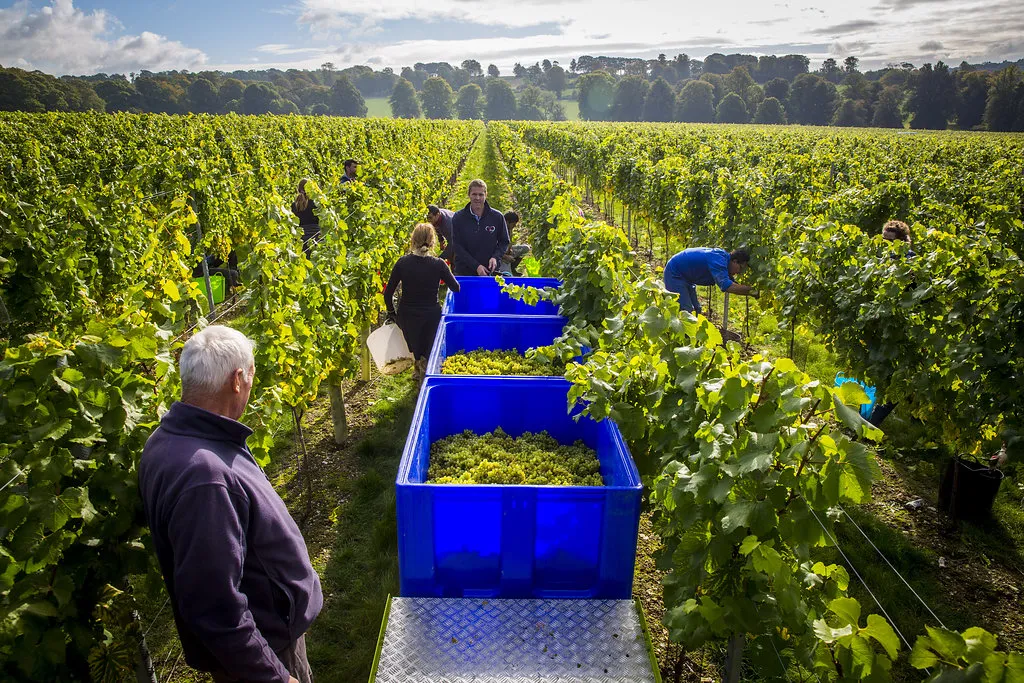
- Simpsons Wine Estate near Canterbury, Kent planted its first 10 hectares in 2014 and now produces up to 250,000 bottles of English sparkling wine per year, sold domestically and exported to Sweden and Norway.
- Estate Manager Darryl Kemp had tried many apps before finding Farmable. The difference was that Farmable was designed for fruit growers, not adapted from arable software.
- The team now tracks spray records, task management, team hours, and withholding period checks from a single app. The app logged 3,381 hours across the team in one season alone.
- “We’ve been able to easily onboard other members of our team into Farmable and it’s only making everyone’s day better to have real-time access to data.”
Simpsons Wine Estate sits in one of the sunniest corners of the British Isles, just south of Canterbury in Kent. The estate began in 2014 with its first 10 hectares of Chardonnay, Pinot Meunier, and Pinot Noir. A few years later a further 20 hectares were planted, and by 2019 all 30 hectares were in full production.
The results have been impressive. Simpsons now produces up to 250,000 bottles of still and sparkling wine each year, with strong demand domestically and, increasingly, in export markets. The wines sell particularly well in Sweden and Norway, often outstripping available supply.
Managing that growth requires the right systems.
“My role is to manage the production so we can meet the growing demand for the wine; it’s exciting but it also means we’ve had to focus on adopting best practices. As a smaller operation, we had all the data in hand-written diaries and while I’d tried many different apps to help, I just never settled on a system to keep organised.”Darryl Kemp, Estate Manager, Simpsons Wine Estate
Finding the right tool for a vineyard
In August 2020, Darryl came across Farmable while searching for a solution that could genuinely simplify the team’s documentation.
“What struck me first was that it was designed for fruit growers. We have a lot of information to visualise in a vineyard, it’s more than your average arable farm.”Darryl Kemp
That distinction matters. Most farm management software is built for broad-acre arable farming and adapted for horticulture as a secondary consideration. Vineyards have a different structure: many small, named parcels; complex treatment schedules across multiple varieties; compliance requirements tied to specific fields; and seasonal workforces that need coordinating across a range of tasks.
Farmable’s design, built from the beginning for orchards and vineyards, not adapted from a grain farm system, was what finally made the difference.
Real-time data across the whole team
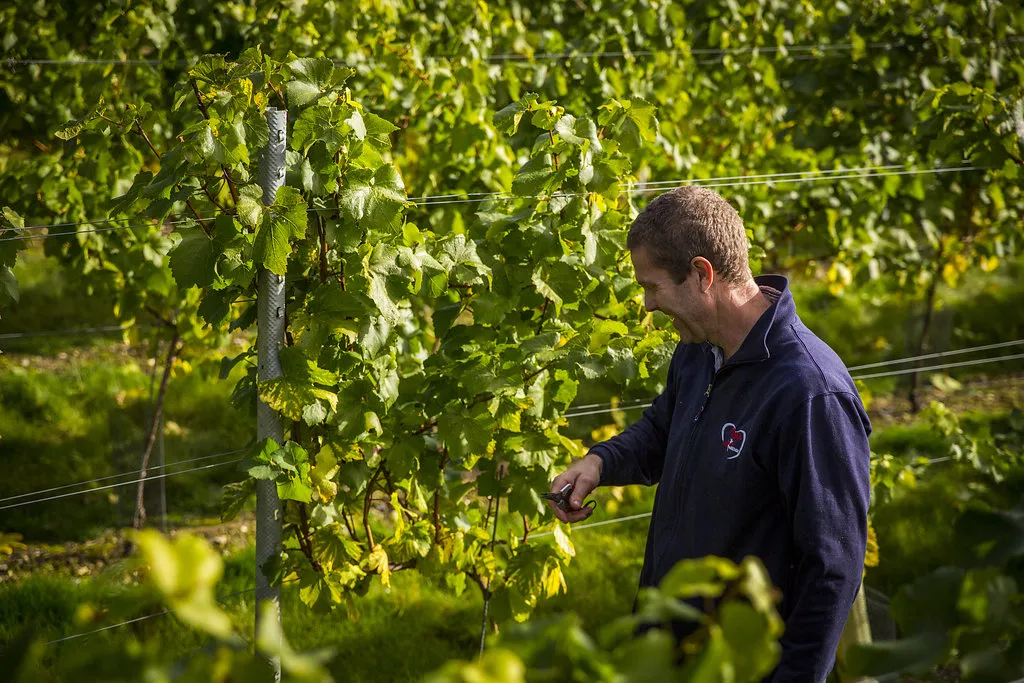
What Darryl found after adopting Farmable was not just better record-keeping, it was better coordination across the entire estate.
“With other systems I’ve tried, I’ve been reluctant to spend the time adding data in fear of needing to pay money just to find out essential information. I don’t have the same hesitation with Farmable, I get valuable feedback from the tool. For example, when we record tasks, we get quick recalls on job status so we can plan accordingly. It’s motivating to see that our time is being used in the best way possible.”Darryl Kemp
Onboarding the team was straightforward.
“Intuitive and easy to use is high on my list of requirements for any tool. We’ve been able to easily onboard other members of our team into Farmable and it’s only making everyone’s day better to have real-time access to data.”Darryl Kemp
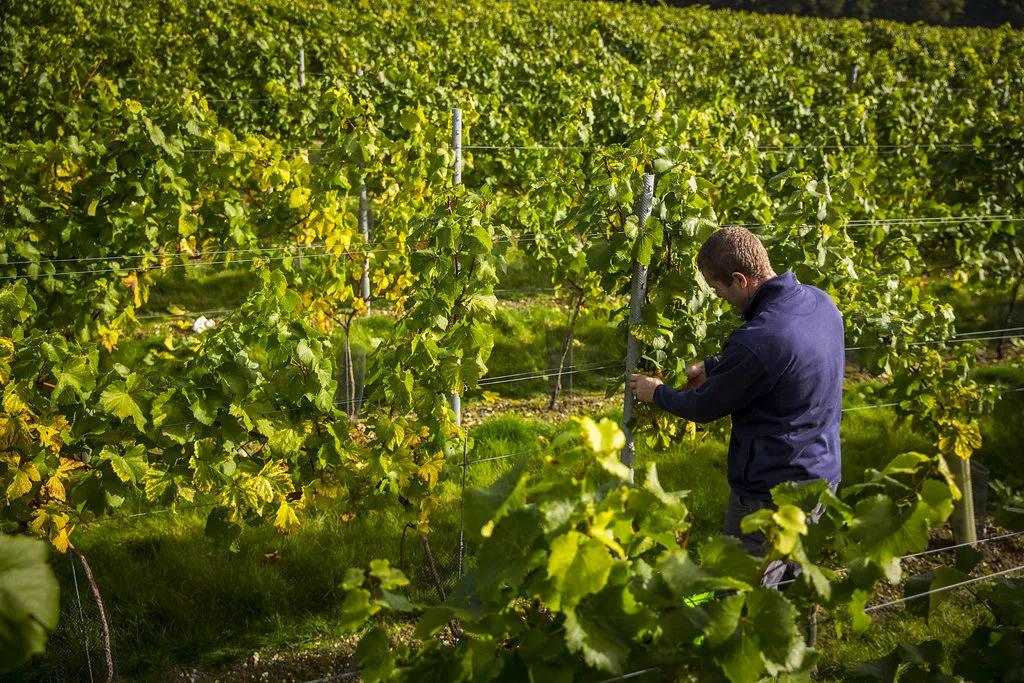
One practical benefit stood out for the tour operation at Simpsons. Team members leading visitors through the vineyards can check the withholding period status of any field in two taps, knowing immediately whether it is safe to proceed, without needing to call the office or consult paper records.
“It’s even been helpful for our team members leading tours of the vineyards, with two clicks they can double check the withholding period on a field and know if it’s safe to proceed.”Darryl Kemp
Hours tracking at scale
The Farmable Teams & Timesheets data from Simpsons gives a concrete sense of what vineyard management looks like in practice. In a single season, the team logged 3,381 hours across all vineyard tasks, with 887 hours recorded in a single month. Tasks tracked include tying in, bottling, and work across individually mapped vineyard parcels.
Each hour is linked to the employee, the task, and the specific field it was worked on, giving Darryl a clear record of labour input across the estate, exportable for payroll and available as a management dashboard throughout the season.
The full story in Vineyard Magazine
Simpsons Wine Estate’s adoption of Farmable was first covered by Vineyard Magazine, the UK’s leading monthly publication for commercial grape growers and winemakers, in June 2021. The full article, written for the Vineyard Magazine audience, is available here: “App built by growers” on Vineyard Magazine.
Frequently asked questions
Does Farmable work for English sparkling wine producers?
Yes. Farmable is used by vineyard managers across the UK, including operations working toward Red Tractor, Sustainable Wines of Great Britain, and GlobalG.A.P. compliance. Spray records are automatically maintained in audit-ready format and accessible from a mobile phone at any time.
Can Farmable handle a vineyard with named parcels and multiple varieties?
Yes. Fields are mapped and named in the app to match your own vineyard layout, each treatment, observation, and labour record is attached to the specific parcel it relates to. This makes compliance reporting, cost tracking, and multi-variety management straightforward.
How does Farmable help vineyard tour operations manage withholding periods?
Farmable stores spray records and withholding period data per field. Any team member with app access can check the current status of a specific parcel in two taps, useful for tour guides, harvest teams, and any staff who need to know whether a field is safe to enter.
Does Farmable support labour tracking for seasonal vineyard workers?
Yes. Farmable Teams & Timesheets records hours per employee, per task, and per field, covering everything from tying in and spraying to harvest and bottling. At Simpsons Wine Estate, the system tracked 3,381 hours across the team in a single season.