
The FDA's Food Safety Modernization Act Section 204, the Food Traceability Rule, requires farms growing certain fresh produce crops to keep enhanced traceability records. The compliance deadline is July 20, 2028, giving farms a clear window to put systems in place before the rule is enforced.
This guide covers everything a fresh produce family farm needs to know: whether you are in scope, which crops are covered, what records must be kept, and how to prepare without creating unnecessary administrative burden.
- Who: US farms (and international farms supplying the US market) growing crops on the FDA Food Traceability List
- What: Enhanced traceability records at specific Critical Tracking Events, primarily harvest
- When: July 20, 2028
- Key requirement: Link every harvested lot back to the field it came from, the date it was harvested, and who received it
Who is in scope
FSMA 204 applies to farms, processors, packers, and holders who grow or handle any food on the FDA's Food Traceability List. It covers commercially grown, packed, and processed food. Home gardeners and home food preservers are not covered.
Fresh produce crops on the Food Traceability List:
- Cucumbers
- Tomatoes
- Herbs
- Leafy greens, including arugula, baby leaf, butter lettuce, chard, chicory, endive, escarole, kale, romaine, spinach, watercress, and other varieties
- Melons, cantaloupe, honeydew, muskmelon, watermelon
- Peppers
- Sprouts, alfalfa, bean, broccoli, clover, radish varieties
- Tropical tree fruits, mango, papaya, mamey, guava, lychee, jackfruit, starfruit
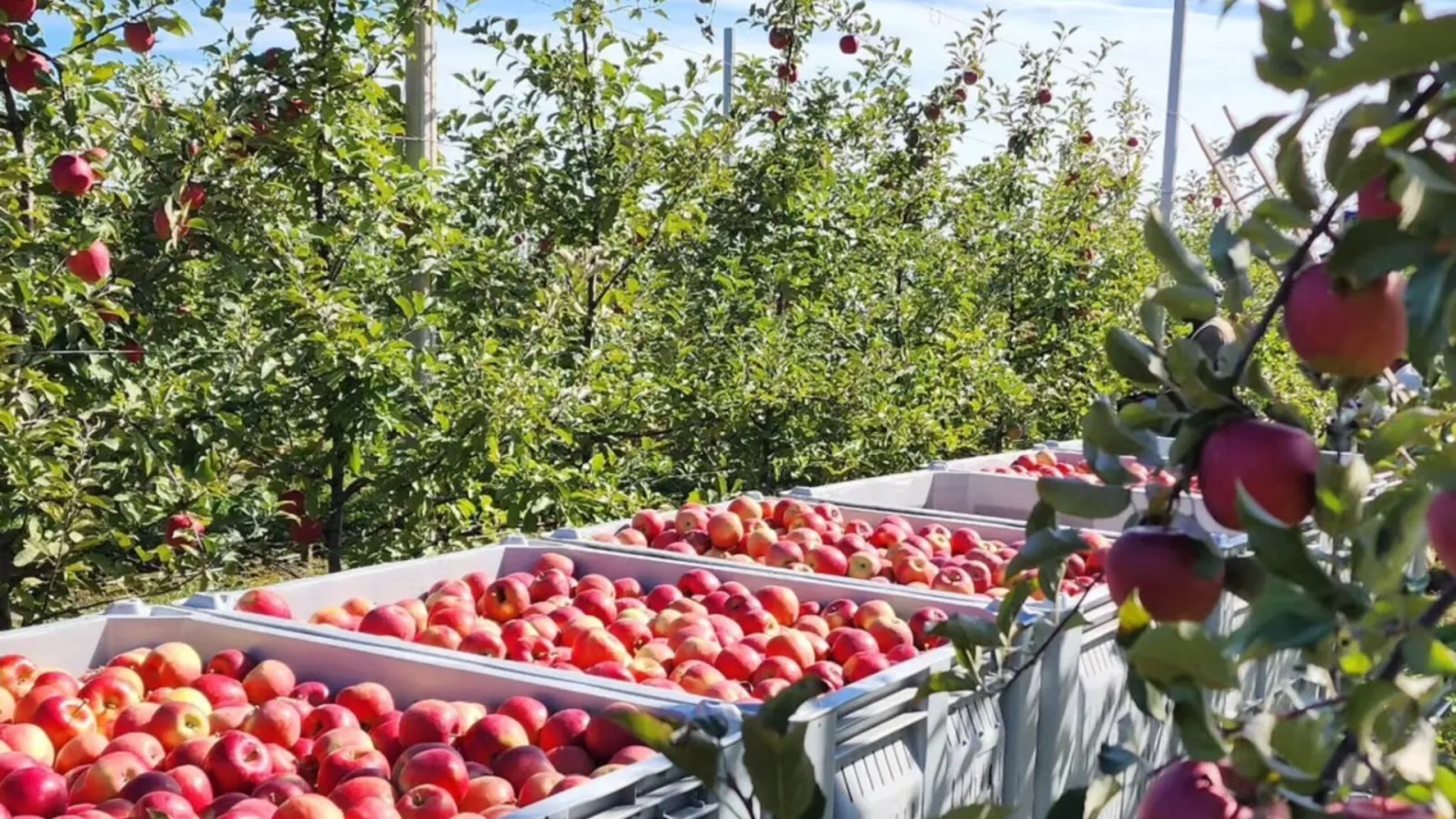
Important: apples, stone fruits, and most temperate tree fruits are NOT on the Food Traceability List. If you grow apples, peaches, cherries, or similar crops, you are not currently subject to FSMA 204 traceability requirements, though standard EPA pesticide record-keeping requirements still apply.
Exemptions: Your farm may be exempt even if you grow listed crops:
- Average annual sales under $25,000 in the previous three years
- Food sold directly to consumers
- Certain on-farm processing and packaging
- Specific food types that receive certain forms of processing
If you are unsure whether your operation is exempt, the FDA provides an online tool at fda.gov to help you determine your status.
What you need to record: Critical Tracking Events and Key Data Elements
FSMA 204 requires documentation at specific points in the supply chain called Critical Tracking Events (CTEs). For most family farms, the most important CTE is Harvest.
The full list of CTEs is:
- Harvesting
- Cooling
- Initial Packing
- First Land-based Receiving
- Shipping
- Receiving
- Transforming
At each CTE, specific Key Data Elements (KDEs) must be recorded and linked to a Traceability Lot Code (TLC) that travels with the product through the supply chain.
Key Data Elements for the Harvest CTE
| Data element | What it means |
|---|---|
| Operating company name | Your farm business name |
| Commodity description | The crop (e.g. "Romaine lettuce") |
| Crop variety | The specific variety harvested |
| Field name / harvest area | Which field or block was harvested |
| Harvest date | The date of harvest |
| Harvest quantity and unit | Volume harvested (boxes, kg, lbs) |
| Farm address or GPS coordinates | Complete address or precise coordinates |
| Farm phone number | Contact number for your operation |
| Immediate subsequent recipient | Name, address, and phone of the first buyer |
If your farm also handles post-harvest operations, cooling, packing, shipping, you need to document KDEs for each of those CTEs as well. The FDA provides a complete KDE spreadsheet (available in 7 languages) on the FSMA website.

The harvest records checklist
Use this checklist to assess whether your current record-keeping will meet FSMA 204 requirements:
- I can map any product (after it leaves the farm gate) back to the specific field it was harvested from
- I can determine the harvest date of any product after it has left the farm
- The harvestable area for each field is accurately documented
- The harvestable area for each crop variety is accurately documented
- I can identify who received which products (by variety) after they left the farm gate
- For any crop variety, I can determine the quantity harvested from a specific field on a specific day
- I have a process for documenting all KDEs in a secure and timely manner
If you answered no to any of these, the sections below describe how to address each gap.
How to prepare: three practical steps
1. Get your field maps right
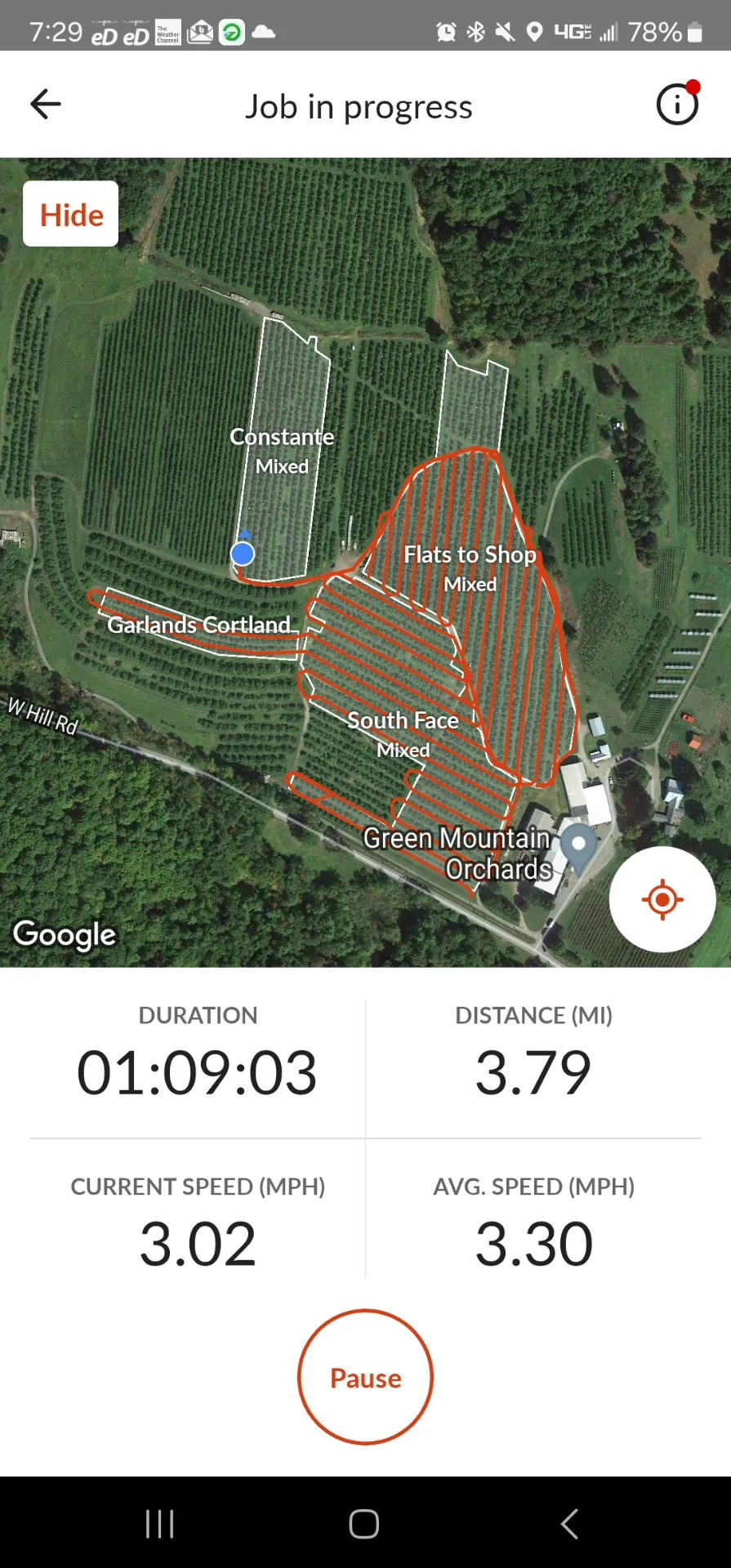
FSMA 204 requires traceability to a specific geospatial location, not just "Field A" but a documented, mapped field with accurate boundaries. If you do not have digital field maps, set these up first. In Farmable, field maps are the foundation of every record, spray jobs, observations, and harvest batches all link back to the field automatically.
2. Use a harvest management tool
The easiest way to generate the Harvest CTE records FSMA 204 requires is to use a farm management app that captures harvest data at the point of picking. Farmable's harvest feature records crop, variety, field, quantity, date, and operator, and generates a QR-coded harvest label that links every bin or batch back to the field record. When an auditor or the FDA asks for traceability data, you have it in one place, searchable by date, field, or variety.
3. Connect your sales records
Knowing who received your product is a core FSMA requirement. If you manage orders on paper or by email, a digital sales management tool makes this traceable without additional work. In Farmable, the sales management module connects harvest batches to customer orders, so the "immediate subsequent recipient" KDE is captured as part of your normal dispatch process, not as extra paperwork.
FDA tools and resources
The FDA has published several free resources to help farms prepare:
- Interactive CTE/KDE presentation, 11 slides covering which data elements are required at each stage, available at fda.gov/media/163132
- FSMA KDE spreadsheet, available in 7 languages, populated and unpopulated versions. Can be used as a template for farms without dedicated software. fda.gov/media/181946
- FAQ section, the FSMA FAQ page at fda.gov is well organised and searchable
- Exemption tool, determines whether your farm qualifies for an exemption
For larger operations or those supplying major retail chains, the GS1 organisation also provides training and resources specifically on FSMA 204 compliance.
Why start now, even with the 2028 deadline
The extension to July 2028 gives farms more time, but not unlimited time. Two practical reasons to start building systems now rather than in 2027:
First, FSMA 204 traceability is retrospective. Buyers, retailers, and food safety auditors can request records going back through the supply chain. If you start logging in 2027, your historical data starts in 2027. If you start in 2025 or 2026, you have years of traceable records before the deadline even arrives.
Second, the farms that put traceability systems in place early are better positioned when negotiating contracts with larger retail buyers. Many major grocery chains and food distributors are already requiring verified traceability from their produce suppliers ahead of the regulatory deadline.
Start capturing harvest records digitally, today.
Common questions
The FDA's Food Traceability Rule compliance deadline is July 20, 2028. This was extended from the original January 20, 2026 date. The requirements, which crops are in scope, what records must be kept, and which events must be documented, remain unchanged.
Related reading
- Farmable Harvest Labels, Traceability from Field to Packhouse
- Grower / Packer / Shipper: Field-to-Export Traceability
This article is general guidance, not legal advice. For the authoritative text and current exemptions, see the FDA Food Traceability Rule (21 CFR Part 1, Subpart S).