
Integrated Pest Management: How to Set Up an IPM Plan for Your Orchard
By Enja Matthee
The pressure on chemical pest control is increasing across every major growing market. Regulatory tightening, rising pesticide resistance, secondary pest development, and growing consumer demand for lower-residue produce are all pushing in the same direction. For many growers, the question is no longer whether to adopt a more integrated approach, it's how to do it practically without taking on unacceptable risk.
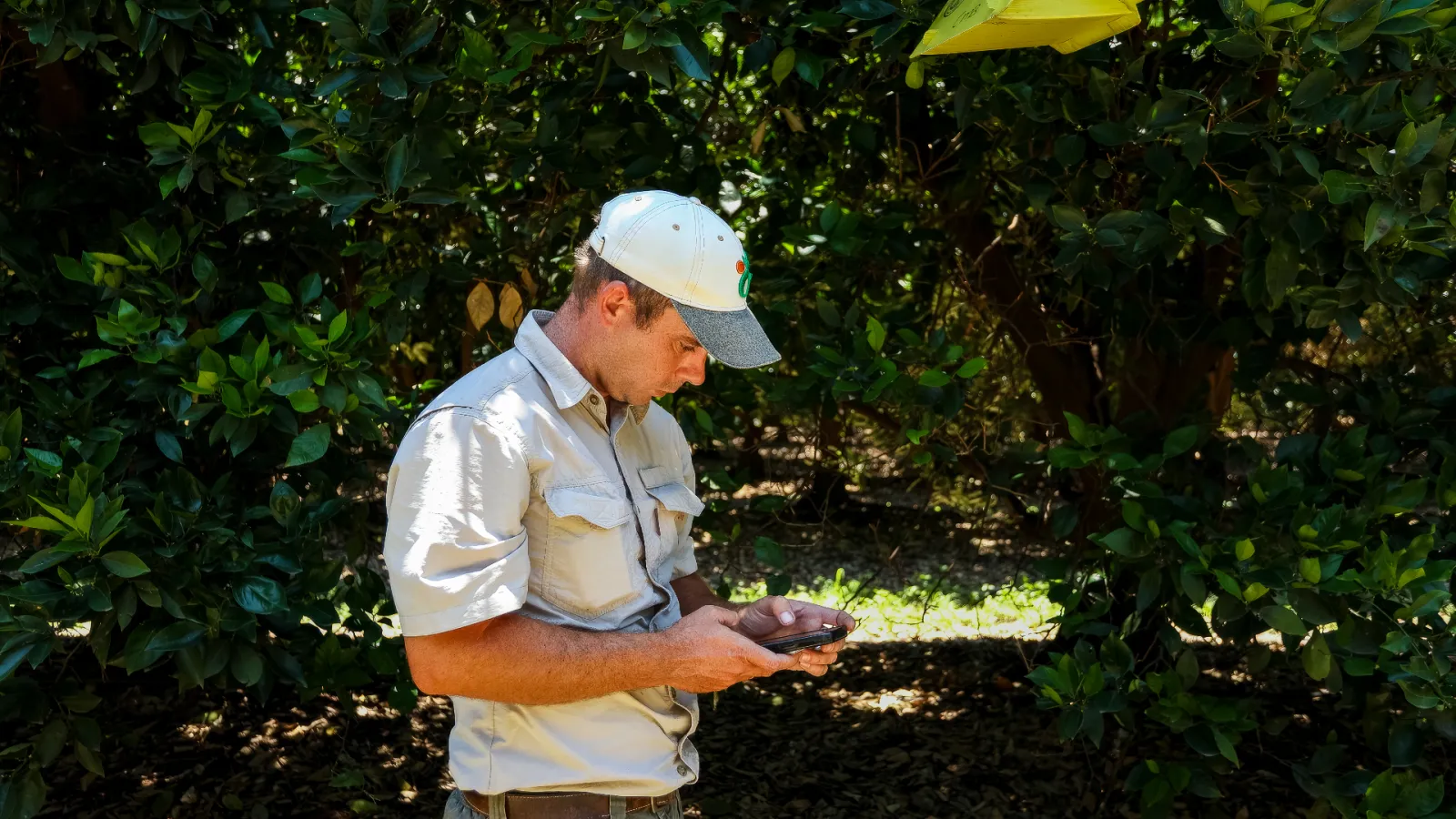
Janus De Klerk's workflow is a good example of what practical IPM looks like: monitor consistently, capture observations in the field, and turn those notes into decisions while the crop is still in front of you.
Integrated Pest Management (IPM) is the framework for that. The underlying practices predate synthetic pesticides, but what's changed is the tooling, the data, and the regulatory expectation that growers document their pest management decisions.
What IPM actually means
IPM is a science-based approach that combines multiple control methods to manage pests economically and sustainably. The goal is not elimination, it's management below the level that causes economically significant crop damage.
The FAO's International Code of Conduct defines it as:
"The careful consideration of all available pest control techniques and subsequent integration of appropriate measures that discourage the development of pest populations and keep pesticides and other interventions to levels that are economically justified and reduce or minimise risks to human health and the environment."
In practice, IPM means monitoring pest populations continuously, making intervention decisions based on economic thresholds rather than calendar schedules, prioritising biological and cultural controls, and using chemical pesticides selectively, as a targeted tool, not a default.
The 5-step IPM process
Step 1, Monitor the environment
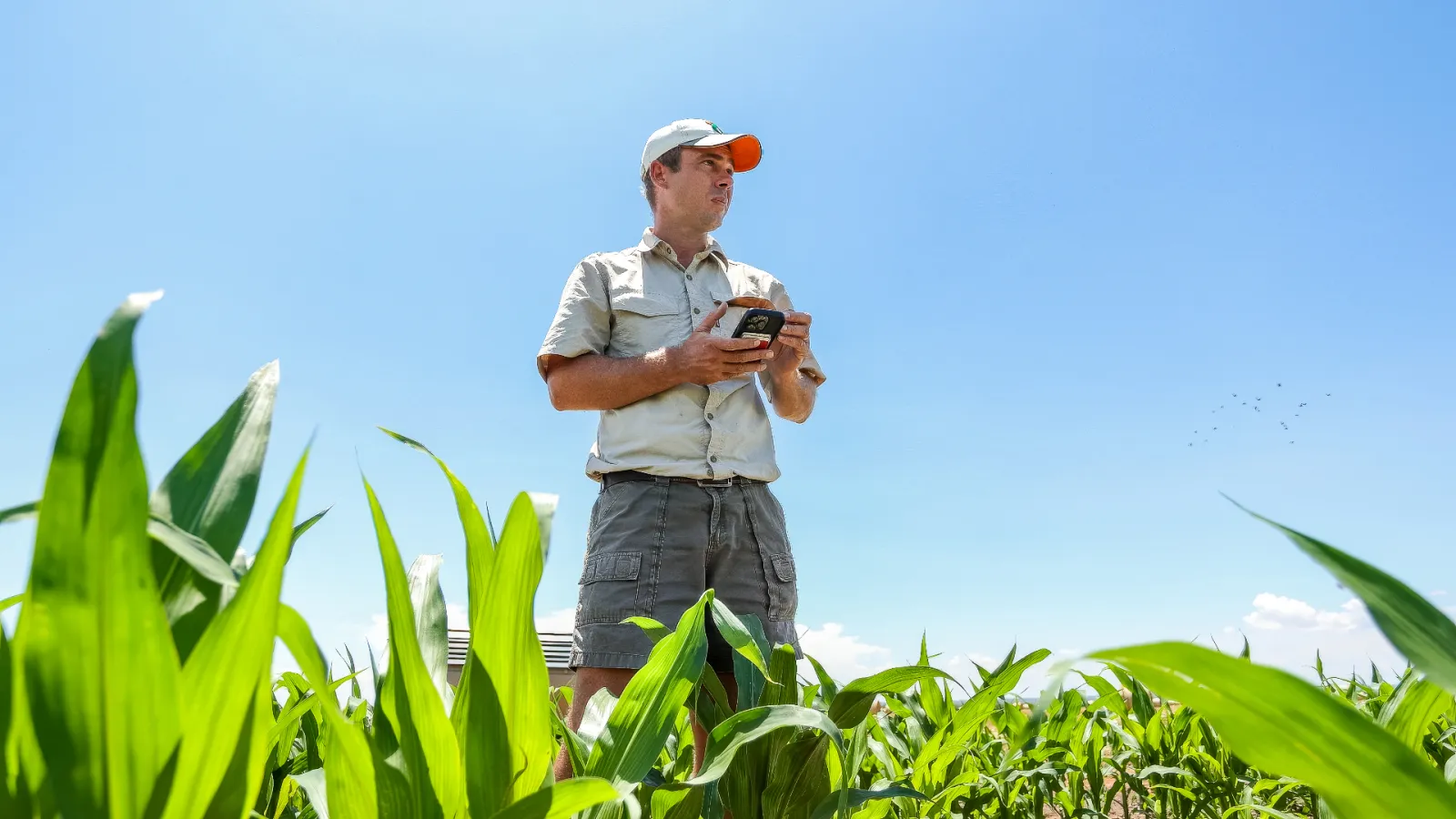
Regular scouting is the foundation. Traps, visual inspection, and population counts give you the data you need to make decisions. The IPM shift is making them systematic and recording the results.
Step 2, Identify the pest
Accurate identification matters. Different pests have different lifecycles, natural enemies, and chemical susceptibilities. Acting on a misidentification wastes money and can make the problem worse.
Step 3, Assess the risk
This is the decisive step. Economic thresholds vary significantly by pest, crop, and market. A threshold of 5 individuals per hectare might warrant immediate action for one species and be irrelevant for another. Expert advice is important here.
Step 4, Implement a treatment strategy
Treatment selection depends on the pest's lifecycle stage, its natural enemies, the value of the crop at risk, and current weather conditions. The four main control methods are applied in sequence from lowest to highest intervention.
Step 5, Evaluate the outcome
Record what you did and whether it worked. This closes the loop, improves your decision-making for the next cycle, and creates the audit trail required by compliance standards and regulators.
The four control methods
Cultural control
Orchard hygiene, removing and destroying infested material, pruning for air circulation, and good soil preparation all reduce pest habitat before it develops. Crop rotation disrupts pest lifecycles. Intercropping, planting species that repel prevalent pests, is an underused tool in permanent crop systems.
Mechanical and physical control
Traps serve double duty: monitoring and mass trapping. Barriers, netting, and physical exclusion can significantly reduce aphid and insect pressure without chemical input. Adjusting spray nozzles to dislodge insects from leaf undersides, hand-picking during low-population stages, and irrigation management all fall here.
Biological control
Natural predators, ladybugs, lacewings, parasitic wasps, suppress pest populations when given the conditions to establish. Spot spraying, careful chemical selection, and preserving habitat strips all support natural enemy populations.
Chemical control
Used when other methods are insufficient and thresholds have been exceeded. Use approved products for your country, follow label instructions, target the specific pest, and rotate modes of action. Early-season interventions are generally better delivered as seed dressings than foliar sprays, this preserves natural predator populations while still protecting the crop.
Why plant health matters
A stressed plant is a more attractive host. Nutrient deficiency, water stress, compacted soil, and disease compromise a plant's natural resistance. Soil preparation, irrigation management, nutrition, and variety selection are all part of the IPM system, not separate from it.
IPM and digital record-keeping
A meaningful IPM programme generates significant documentation: scouting observations, threshold assessments, treatment decisions, product details, application records, and outcome evaluations.
From 1 January 2027, the EU requires all spray records to be kept digitally. Farmable logs field observations, pest scouting notes, and spray jobs in the same app, creating a continuous IPM record that demonstrates responsible pest management to auditors and regulatory authorities.
See how Farmable supports IPM: /grower/pest-management
Frequently asked questions
What is Integrated Pest Management (IPM)?
Integrated Pest Management (IPM) is a science-based approach to pest control that combines monitoring, economic thresholds, and multiple control methods, biological, cultural, mechanical, and chemical, to manage pests with the least environmental impact and the greatest economic efficiency. The goal is not to eliminate pests entirely, but to keep them below the level at which they cause economically significant damage.
What are the 5 steps of an IPM programme?
- Monitor, regular scouting and trapping to track pest populations
- Identify, accurate identification of the pest species
- Assess, determine whether populations have reached an economic threshold
- Implement, choose the appropriate control method based on pest lifecycle, natural enemies, and crop value
- Evaluate, record outcomes and adjust for the next cycle
When should I use chemical pesticides in an IPM programme?
Chemical pesticides are used as a targeted intervention when pest populations exceed the economic threshold and other control methods are insufficient. Rotate modes of action to slow resistance development. Early-season requirements are generally better met with seed dressings than foliar sprays, to preserve natural predator populations.
How does plant health affect pest pressure?
Stressed plants are significantly more attractive to pests. Poor nutrition, water stress, soil compaction, and disease weaken a plant's natural defences. A robust IPM programme includes attention to soil health, irrigation, and nutrition, keeping plants vigorous reduces pest pressure before it reaches action thresholds.