
PrimusGFS certification covers Farm GAP, Harvest Crew GAP, GMP (Good Manufacturing Practices), and an optional Module 9 for Integrated Pest Management. Farmable is not a certified PrimusGFS partner, but its field jobs, harvest records, product inventory and pest-monitoring notes already support the records the Farm GAP, Harvest Crew GAP and Module 9 portions of the audit ask for. The written FSMS documents, document control, management review, HACCP, sit outside any farm records app and need a separate program.

What PrimusGFS actually audits
PrimusGFS is a GFSI-benchmarked food safety audit used widely across the fresh produce industry, especially by growers supplying US retailers and foodservice buyers. Certification is organized into modules, and which ones apply to your operation depends on what you grow and how you handle it after harvest. For a typical fruit or vegetable farm, the relevant modules are usually:
| Module | Covers |
|---|---|
| Module 1FSMS | Document control, management review, corrective actions, HACCP |
| Module 2Farm | Field-level GAP: water, soil, chemical use, worker hygiene |
| Module 3Indoor Agriculture | GAP for greenhouse/covered production |
| Module 4Harvest Crew | Crew hygiene, sanitation, and traceability during picking |
| Module 9IPM Practices | Optional add-on verifying a documented IPM plan |
An auditor is largely reviewing roughly a year of accumulated records against this checklist, which is why farms with clean, organized digital records consistently prepare faster and score better than farms relying on paper files kept in a drawer.
Farm GAP and Harvest Crew GAP: where Farmable's Logs help most
The Farm and Harvest Crew GAP modules ask for exactly the kind of field-level operational data that Farmable's Logs are built to capture: what was applied, where, when, at what rate, and by whom.
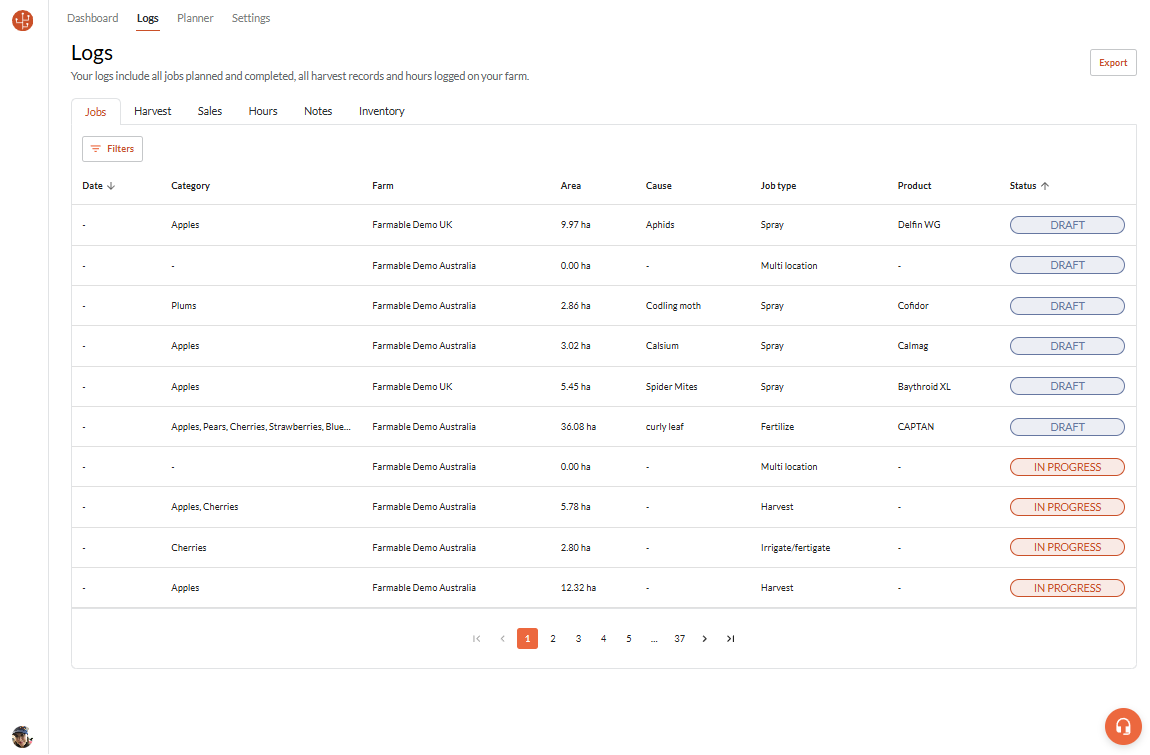
Every job in Farmable, spray, fertilize, or other treatment, is recorded against a specific field, with the product used, the area treated, the cause (pest, disease, nutrient deficiency, and so on), and a status through to completion. That's the same information an auditor looks for when checking chemical application records: product, field, date, and rate.
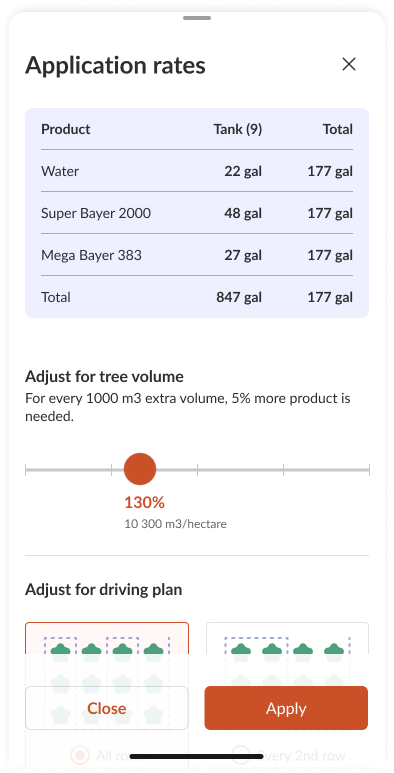
For growers doing calibration-sensitive applications, adjusting product volume for tree canopy size, for example, Farmable's application rate calculator keeps that math out of a notebook and in the record itself:
Harvest Crew GAP adds a traceability layer on top: linking picked fruit back to the specific field and date it came from. Farmable's harvest records already capture field, variety, quantity, and date at the point of picking, so the traceability chain an auditor asks for is a byproduct of your normal harvest workflow, not extra paperwork.
GMP and inventory: knowing what's actually on the farm
For operations with a packhouse or on-farm storage component, GMP modules ask about product handling and stock control. Farmable's live inventory tracking shows what's been purchased, what's in stock, and what's been used, by product, in real time:
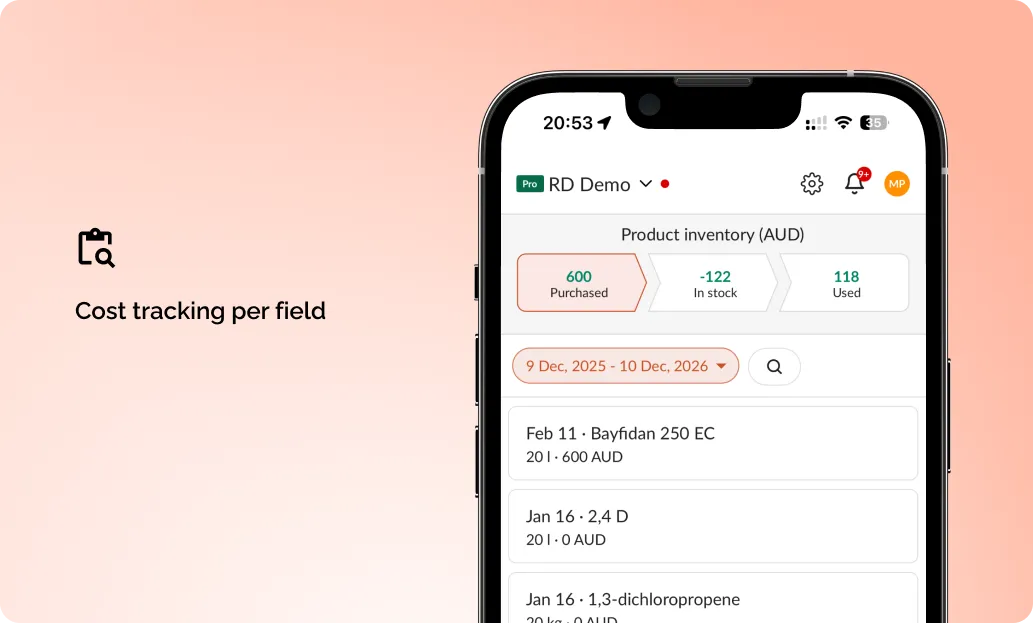
This matters for an audit for a simple reason: inventory records that match your application records are one of the easiest things for an auditor to cross-check, and one of the most common places paper-based farms get caught out.
PrimusGFS Module 9, IPM Practices, and how Farmable supports it
Module 9 is worth calling out on its own. Released by Azzule in late 2023, it's a five-question optional add-on to the standard PrimusGFS audit that verifies an operation has a documented Integrated Pest Management plan, scored separately from the core food safety audit, but increasingly required by large retailers as part of their sustainability expectations.
The core of what Module 9 checks is whether pest and disease decisions are being made from actual monitoring, trap counts, scouting, thresholds, and not on a blanket calendar schedule. This is precisely the workflow Farmable's monitoring notes are built around:
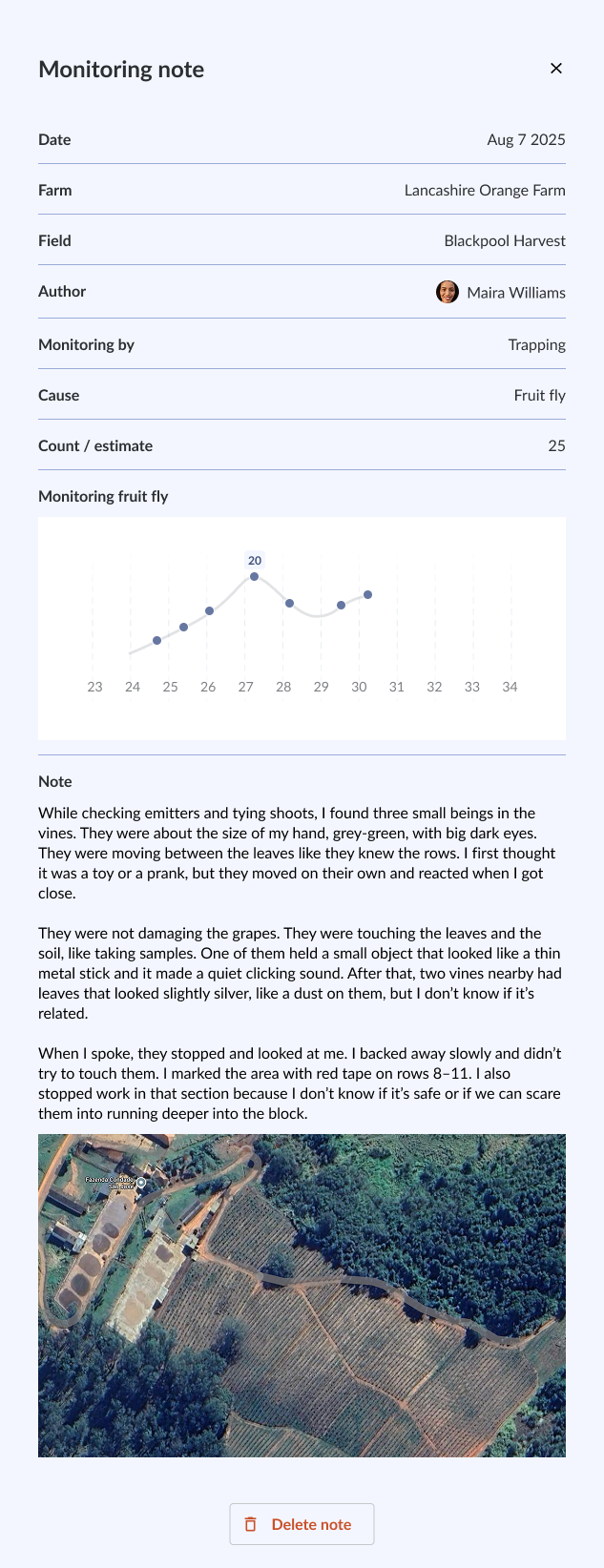
A monitoring note in Farmable records the pest or disease being tracked, the monitoring method (trapping, visual count, and so on), a count or estimate, a trend chart over time, and a free-text field note, all tied to a specific field. Because monitoring notes and spray jobs live in the same system, a monitoring note can be linked directly to the treatment job it led to. That connected record, "we monitored, we crossed a threshold, we treated", is exactly the kind of evidence a documented IPM plan needs to demonstrate, and it's a stronger audit trail than a spray log alone, because it shows the reasoning behind the application, not just the application itself.
If you're preparing for Module 9 specifically, the practical starting point is consistent monitoring note habits in the field, not a separate IPM binder. If your team is already logging observations in Farmable, most of the evidence Module 9 asks for already exists; it just needs to be pulled together for the audit.
What Farmable doesn't cover, and why that's worth saying plainly
Module 1 (FSMS) is largely written policy: a document control procedure, an annual management system review, a HACCP plan, and a corrective action procedure. These are governance documents your operation writes and maintains, they aren't farm-operations data, so they sit outside what Farmable (or any farm management app) tracks. Farmable can support the records these documents reference, for example, showing that records are stored and retrievable in an organized, digital, access-controlled way:
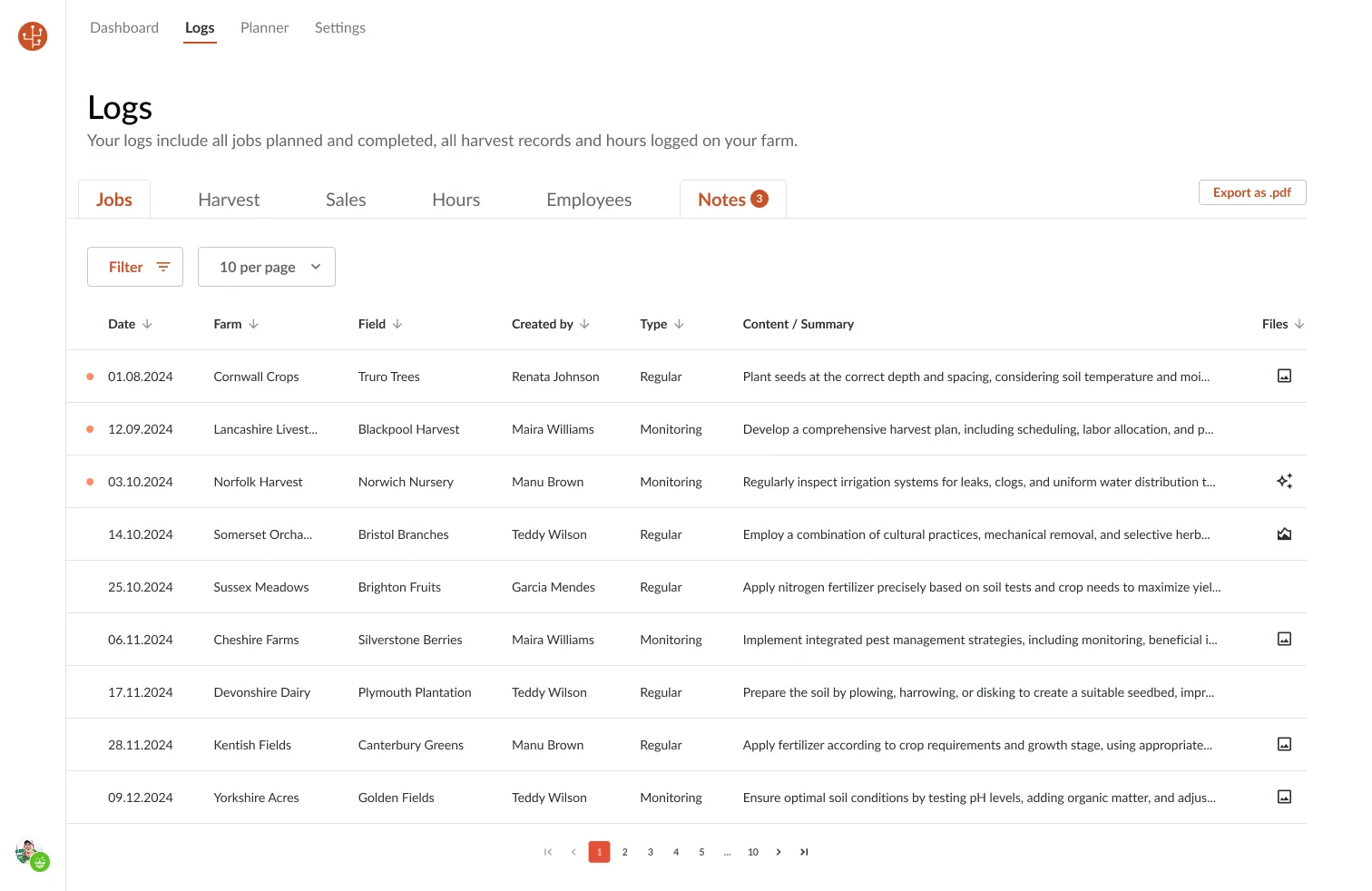
But it doesn't replace the written program itself. If you don't already have an FSMS document set in place, that's a conversation for your chosen Certification Body or a food safety consultant, not something a records app can generate for you.
For US growers: EPA product records alongside PrimusGFS
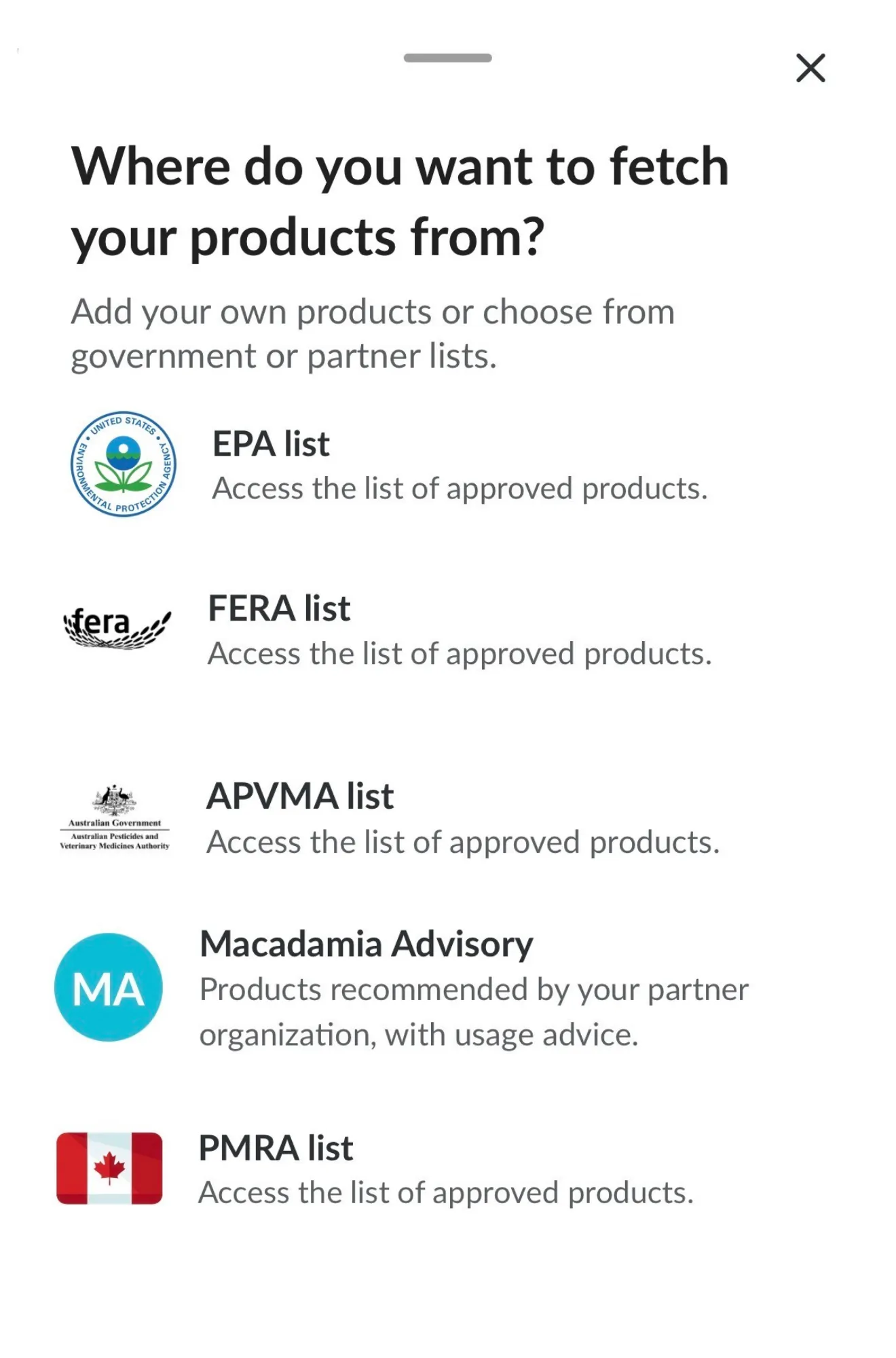
PrimusGFS doesn't require EPA registration on its own, that's a separate US federal requirement, but nearly every US fresh produce operation needs both at once. Farmable's product library lets you pull directly from the EPA approved product list when adding a new product, so your PrimusGFS application records and your EPA record-keeping obligations are satisfied from the same entry:
Getting ready for a PrimusGFS audit
- Keep field records as you work. Every spray, fertilize, and pest control job logged against the correct field, in real time, not reconstructed the week before the audit.
- Log monitoring, not just treatment. If Module 9 applies to you, start (or keep) logging scouting and trap counts as monitoring notes, and link them to the jobs they trigger.
- Reconcile inventory regularly. Stock that matches your application records is one of the fastest checks an auditor runs, keep it current.
- Handle FSMS separately. Document control, management review, and HACCP live in your written food safety program, not in a farm records app, plan for that as its own workstream.
See how Farmable supports pest monitoring: /grower/pest-management
See how Farmable supports audit prep more broadly: /grower/compliance