
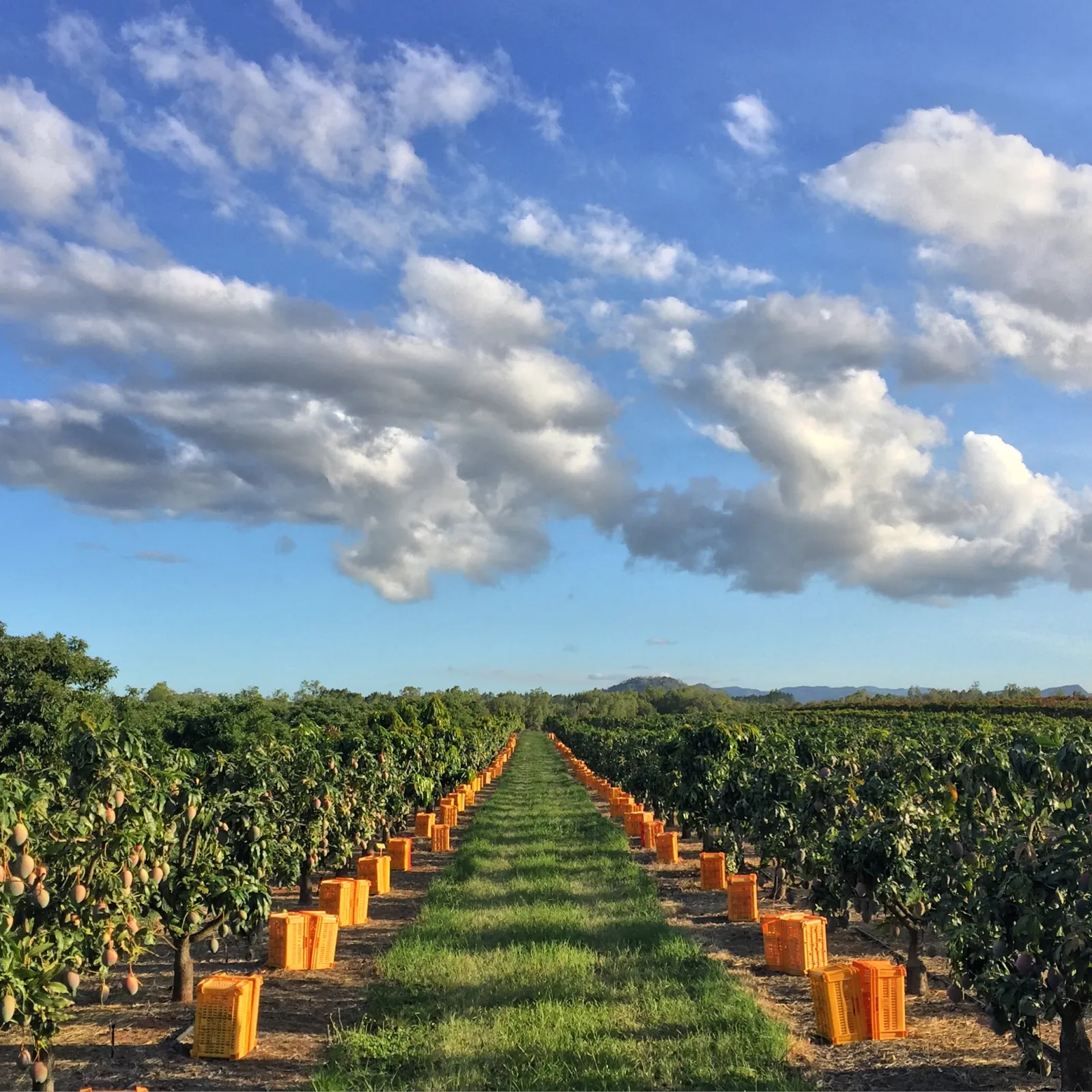
- Matt Fealy managed a 60ha mango, avocado, and lime farm in Far North Queensland using Farmable daily, then moved to a 300ha avocado operation running expensive broad-acre software.
- The mismatch between broad-acre tools and tree crop workflows cost the larger farm more than AUD $10,000/year in software fees plus a near-full-time administration resource to bridge the gap.
- Switching to Farmable at the 300ha farm allowed the team to reallocate that administration resource, cancel the broad-acre subscriptions, and give the farm manager his time back.
There are three things in my life that drive me: family, farming, and technology. I've been lucky enough to balance all three, and that balance holds when technology supports the farm, which allows the farm to support the family. Recently, that balance broke. Here is what I learned.
A farm management app that actually stuck
Up until August 2023, I was Farm Manager at Blue Sky Produce, a 60-hectare farm producing mangoes, avocados, and Tahitian limes in Far North Queensland. My family and I lived there for more than ten years.
In 2017, I received a Nuffield Scholarship to study technology I could use on the farm. I tested a lot of different digital tools, but nothing was a good fit for tree crops. In 2019, I found Farmable. It was built from the ground up on the experience of a fruit farm in Norway, and it actually worked for tree crops. I started using it for delegating and recording spray jobs and quickly got hooked. I was saving time on paperwork and low-value tasks, and freeing up more time to manage the farm and spend with my family.
While working at Blue Sky, I used Farmable daily. It wound itself into our natural operating workflow and never left. But then came the day that I did.
Bigger not better
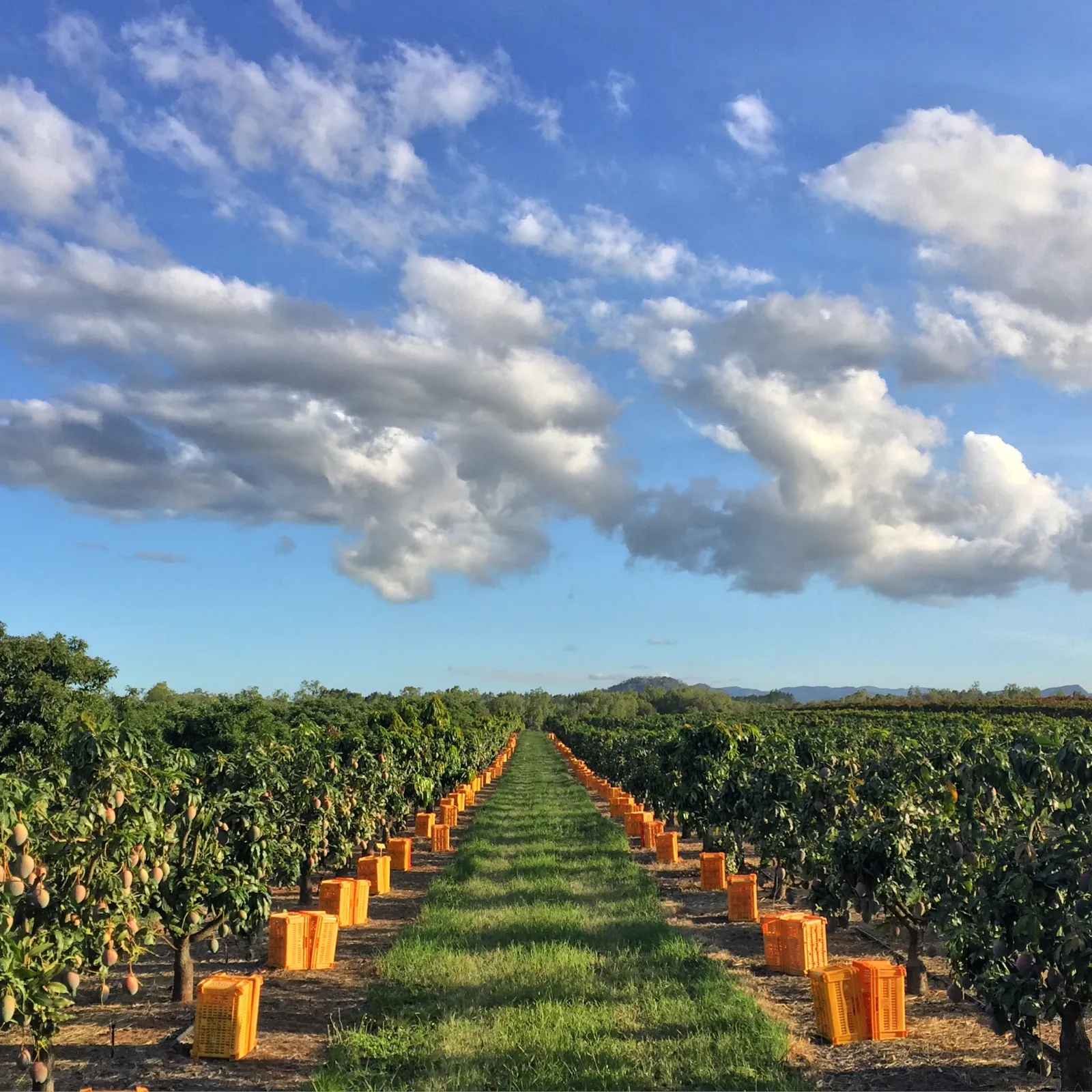
In September 2023, I took over as Farm Manager for a 300-hectare avocado farm, high-density, over 250,000 trees, up to 100 staff during harvest across five different planting stages.
The owners had tried to implement a wide range of digital tools. But like my earlier experience before Farmable, they had been unable to find anything fit for tree crops. My first days were spent trying to understand a patched-together web of applications, all primarily designed for broad-acre crops.
Constantly using a tool that is a misfit creates more work. Let me be specific about how this plays out.
1. Planning with a misfit system
Two expensive and incompatible broad-acre systems were in place, one for job planning, one for task recording and cost tracking. Neither suited the workflow of an avocado farm. I was immediately reduced to writing paper job plans: start in Excel to calculate tank mixes, print to paper, write out job details, hand them to staff.
Paper gets lost, ripped, and wet. When returned, it needed to be manually input into one of the expensive systems by an administration resource. As Farm Manager, I should be managing the operation, not getting weighed down on low-value tasks like assigning work and chasing paper.
2. Executing a work order with a misfit system
One of the broad-acre systems was integrated with equipment on the farm. On an avocado farm, blocks are small, 60 blocks, each about 4.5 hectares, with a dozen jobs across all of them. Here is what executing a work order looked like in practice:
Start a work order in the assigned block. Drive 120 metres and enter a new block. Stop. Wait for RTK to load, up to 20 minutes. Receive new work order. Drive another 120 metres and enter the next block. Repeat.
In broad-acre, one work order can cover thousands of hectares for days. Not on a tree crop farm. The result was frustrated operators and expensive equipment sitting idle while syncing.
3. Reporting on completed work with a misfit system
Back in the office, reports from the expensive integrated system didn't match the cost and inventory tracking system. More administration resources were needed to work in Excel to reconcile paper records, planned work, completed work, and costs. Manual data entry filled the gap, opening up unnecessary errors and costing the business close to an entire administration FTE.
Combined, these misfit systems produced:
- Day-to-day frustration for the operating team
- Wasted time for operators and idle equipment
- A near-full-time administration workload with significant risk of human error
- More than AUD $10,000 per year in software fees for tools that created more problems than they solved
Switching to Farmable
I made it a priority to implement Farmable as soon as I had the autonomy to make that call. Due to Farmable's intuitive design, retraining the team didn't take long.
Today, the farm uses Farmable for all digital data management:
Job planning is done from my mobile phone in the app. Tank mixes are automatically calculated, making product ordering straightforward. Blocks and operators are assigned in a few taps.
Operators complete jobs using Farmable. Everything a driver needs to know is in the app. Work is GPS-tracked and visible from a mobile in real time. No expensive proprietary equipment, just the phone they already own.
Reporting is automated. Spray diaries are generated and ready for audit. Input costs are captured against each job and field. Product inventories are always current.
With this change, we reallocated a full-time administration resource, cancelled the broad-acre software subscriptions, and reduced operator frustration. I'm spending my time managing the farm instead of pushing paper, and I have more time with my family.
The bottom line
Don't suffer with software that doesn't fit your farm.
Using fit-for-purpose software gives a completely different experience than forcing the wrong system into place. With a misfit system, you will spend more time fixing data gaps than you will benefit from data management. With the right tool in place, the cost and time savings happen easily, and you won't be able to go back.
Frequently asked questions
Is Farmable suitable for large avocado or tropical fruit farms?
Yes. Farmable is used across operations of all sizes, from small family farms to multi-hundred-hectare commercial operations with large seasonal workforces. Job planning, tank mix calculation, GPS tracking, and spray record generation all scale with the size of the operation.
What does Farmable cost compared to broad-acre farm software?
Farmable is significantly more affordable than enterprise broad-acre systems. Matt Fealy's 60ha Blue Sky operation paid less than AUD $500 per year. The 300ha operation replaced more than AUD $10,000 per year in broad-acre software subscriptions.
How long does it take to get a team onto Farmable?
Due to Farmable's intuitive mobile-first design, retraining a team from a previous system is typically fast. Matt Fealy's 300-hectare operation completed the transition without significant downtime.